
On a PVC window, the choice between sealant and silicone is not just a matter of flexibility or color. The determining factor, rarely addressed in usual comparisons, concerns compatibility with the drainage system integrated into the PVC joinery and compliance with the requirements of DTU 36.5 for window installation.
Drainage of the PVC window and risk of obstruction by the seal
A PVC profile incorporates drainage holes at the bottom. These openings allow the flow of condensation and infiltration water that passes through the rebate. A poorly placed silicone bead at the bottom of the joinery can obstruct these openings and cause issues: swelling of the support, infiltration into the frame, degradation of the wall below the window.
We regularly observe this problem on installations where a continuous silicone seal has been applied around the entire frame, without interruption at the drainage points. Acrylic sealant, which is less watertight against standing water, poses less risk of obstruction but does not protect against external capillary rise.
The best practice is to interrupt the sealing bead at each drainage hole, regardless of the product chosen. This implementation point affects durability much more than the type of sealant selected. Before deciding between sealant or silicone for PVC windows, one must first identify the exact configuration of the profile’s drainage.
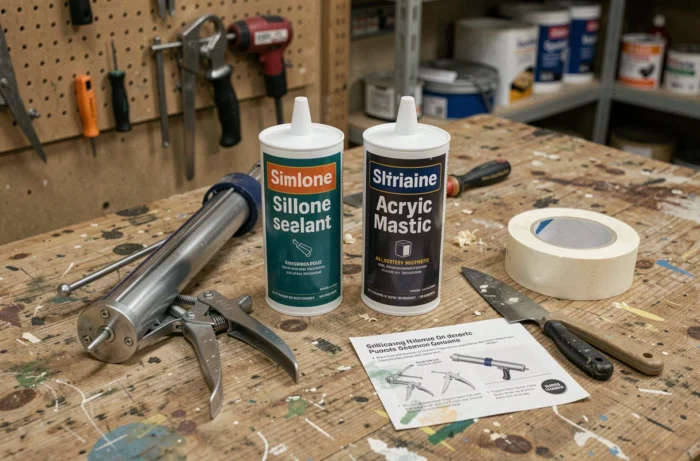
Neutral silicone or acetic silicone: compatibility with PVC
Only neutral silicone is compatible with PVC. Acetic silicone, recognizable by its vinegar smell when drying, releases acetic acid that can attack certain metals present in window hardware and degrade the peripheral EPDM seals.
Neutral silicone polymerizes without acid emission. It offers stable adhesion on PVC, aluminum, and glass, making it suitable for exterior sealing of windows. Its UV resistance exceeds that of acrylic sealant, which tends to crack after a few summer-winter cycles in direct exposure.
When acrylic sealant remains relevant for PVC windows
Indoors, acrylic sealant has a clear advantage: it can be painted and sanded, unlike silicone. For the finishing joint between the PVC frame and the plasterboard lining, acrylic allows for a uniform paint touch-up without visible demarcation.
Acrylic also better withstands slow movements of shrinkage from plaster or coating. However, it is not suitable for areas exposed to running water or permanent moisture. We recommend reserving it for dry interior joints, never for the outer perimeter of the frame.
REACH regulatory compliance and product traceability
The REACH regulation has undergone recent updates, with new restrictions on substances of concern and increased documentary traceability requirements for construction chemicals. General-purpose sealants and silicones do not all guarantee compliance with current REACH regulations.
For a site subject to traceability obligations (collective housing, ERP), we recommend checking the safety data sheet (SDS) of the product and its REACH compliance declaration before purchase. This point goes beyond simple technical performance, but it conditions the acceptance of work within a strict regulatory framework.
Criteria for choosing sealant or silicone for PVC windows: comparison table
| Criterion | Neutral Silicone | Acrylic Sealant |
|---|---|---|
| Adhesion on PVC | Excellent | Good |
| UV Resistance | High | Medium |
| Paintability | No | Yes |
| Water Tightness | High | Limited |
| Recommended Use | Exterior, humid areas | Interior, dry joints |
| PVC Drainage Compatibility | Watch for obstruction | Less critical |
This table summarizes common trade-offs on site. The choice is not binary: on the same PVC window, it is common to use both products, each in its location.
DTU 36.5 and installation requirements for sealing PVC windows
The DTU 36.5 standard governs the installation of windows and sets the requirements for air and water tightness at the sealing level. It particularly mandates that the exterior joint provides a water barrier while allowing ventilation of the rebate. Neutral silicone on the exterior meets this requirement, provided that the implementation respects the interruptions at the drainage devices.
The DTU also distinguishes between interior sealing, which must ensure air tightness. A quality acrylic sealant, applied on a clean and dry substrate, fulfills this function. The combination of neutral silicone outside and acrylic inside constitutes a compliant and proven solution.
Points of caution during implementation
- Clean the substrate with a degreaser before application: any trace of dust or grease reduces adhesion on PVC, regardless of the product
- Apply a foam backing rod in grooves deeper than a few millimeters to limit product consumption and ensure a proper joint section
- Never smooth a silicone joint with a wet finger using dish soap on the outer perimeter: the residual greasy film prevents any subsequent touch-up and compromises adhesion in case of re-intervention
- Ensure that the drainage holes remain clear after the joint is applied by testing the flow with a trickle of water

The choice between acrylic sealant and neutral silicone for a PVC window depends less on the product than on its location and implementation. Neutral silicone outside, paintable acrylic inside, with particular attention to the drainage of the profile: this is the configuration that offers the best compromise between tightness, durability, and regulatory compliance.