
Since the summer of 2026, the European regulatory framework surrounding medical artificial intelligence has become clearer with the entry into force of Regulation EU 2026/1744. This text postpones the strictest obligations for medical devices incorporating AI until August 2028, while imposing transparency rules for chatbots and generated content immediately.
This gap between what is technically possible and what is regulatory deployable shapes the actual pace of health innovations for the coming years.
AI Act and medical devices: a regulatory reprieve that changes the game
The so-called “Digital Omnibus” regulation has officially postponed the application of the high-risk obligations of the AI Act for AI systems integrated into medical devices and in vitro diagnostics subject to MDR/IVDR until August 2, 2028. Embedded AI diagnostic solutions (imaging, triage, clinical decision support) thus have a two-year reprieve.
This delay does not mean an absence of constraints. These systems will automatically remain classified as high-risk AI, with strict governance, technical documentation, and post-market surveillance requirements starting in 2028. Manufacturers developing their algorithms today must anticipate these obligations or risk being unable to market their products on time.
Since August 2, 2026, the obligations of Article 50 of the AI Act are already applicable. Any conversational assistant used with patients must clearly indicate that it is an interaction with AI. Images, audio files, and synthetic videos for medical use must be labeled as such.
These measures, published in the EU Official Journal on July 24, 2026, illustrate a deliberate choice: to protect patients through transparency before regulating algorithm performance. Stakeholders monitoring these regulatory developments, such as La Santé de Demain, help measure the gap between technological promises and the reality of deployment.
Artificial intelligence in diagnostics: autonomous clinical agents under supervision
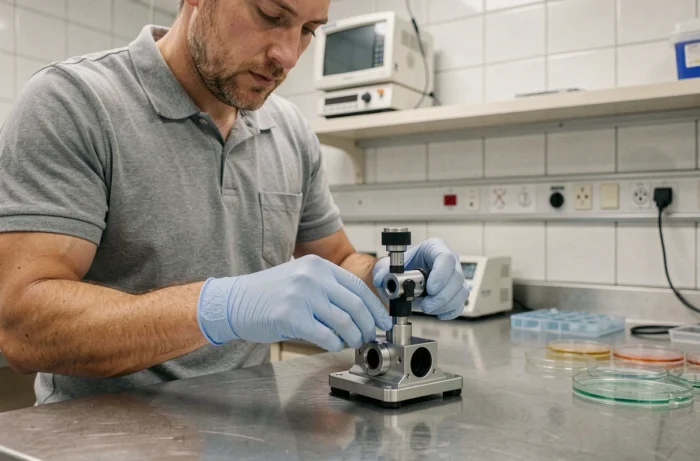
The generation of AI emerging in 2026 is no longer limited to image reading assistance tools. “AI agents” are capable of performing complete tasks: prioritizing symptoms, planning additional tests, analyzing biological results, and proposing treatment coordination. Their operation resembles that of a clinical co-pilot rather than a simple algorithmic filter.
Field feedback on this point varies. Some institutions report significant time savings in emergency triage, while others highlight the risk of clinician disengagement in the face of a machine that “decides” in their place. The question of medical responsibility remains open: who is responsible when an AI agent misprioritizes a patient?
The President of the European Commission reminded in September 2026 that AI in healthcare must “remain European” and not replace doctors. The United Kingdom published its own recommendations for regulating medical AI the same week. These political stances reflect a real tension between the speed of technological adoption and the ability of health systems to frame these tools.
Synthetic data and clinical research: a discreet acceleration
Among the least visible but most structuring innovations, the generation of synthesized data for clinical research profoundly changes the way trials are designed. The principle is to create artificial datasets that replicate the statistical characteristics of real cohorts without exposing personal patient data.
The benefits are threefold:
- Accelerate the training of medical AI algorithms without relying on hospital databases subject to GDPR and long access delays
- Allow startups and SMEs in the sector to develop robust models without having privileged access to data from large hospital centers
- Reduce biases related to overly homogeneous cohorts by simulating underrepresented patient profiles in existing databases
The available data do not yet allow for conclusions about the long-term reliability of these synthetic datasets compared to real data. Regulatory agencies have not yet published a specific framework to validate medical devices trained exclusively on synthetic data. This is a regulatory blind spot that could hinder adoption despite the technical potential.
Gene editing and targeted therapies: CRISPR enters a new phase
Gene editing through CRISPR combined with AI is entering a phase where genetic corrections no longer target only rare monogenic diseases. Algorithms can now identify therapeutic targets for polygenic diseases, where multiple genes interact. Precision medicine applied to oncology directly benefits from this convergence, with approaches like liquid biopsy that allow treatment to be tailored to the molecular profile of a tumor in near real-time.
However, the transition from research to routine care remains slow. Approved gene therapies still concern a limited number of diseases, and their production costs hinder their widespread use. 3D bioprinting of tissues, often presented as an imminent revolution, faces challenges in vascularizing printed structures that research has not yet resolved.
Connected devices and digital twins: real-time patient monitoring
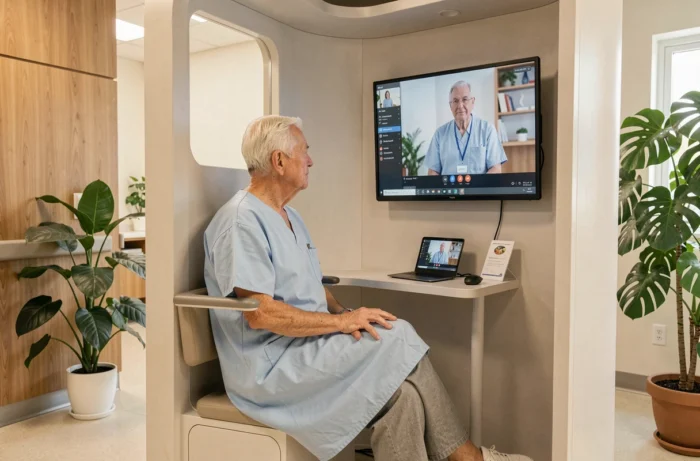
Wearable sensors that continuously transmit physiological data to a doctor or algorithm are no longer experimental. A diabetic patient can adjust their treatment via a sensor linked to their smartphone without waiting for their next consultation. This model of continuous telemonitoring transforms the care pathway by shifting part of the monitoring out of the hospital.
The digital twin takes this logic further: it involves creating a virtual double of the patient, powered by their biological data, to simulate the effect of a treatment before administering it. The most advanced applications concern cardiology and surgical planning.
The limitations are known. Interoperability between devices remains low, data formats vary from one manufacturer to another, and integration into hospital information systems takes years. The technology exists, but the infrastructure to exploit it on a large scale remains fragmented.
The actual pace of these transformations will depend less on the capacity for invention than on the absorption capacity of health systems. Between the regulatory reprieve of the AI Act, the open questions about medical responsibility, and infrastructure barriers, each innovation will have to pass through several filters before it can concretely change the daily lives of patients and caregivers.