Leisure, in the strict sense, refers to any activity practiced outside of work time and domestic obligations. The challenge is not finding one, but choosing one that lasts over time, regardless of the season or weather. Several approaches allow for the construction of a repertoire of activities suitable for each moment of the year, from simple breathing exercises to outings in nature.
Micro-adventure nearby: the leisure that doesn’t depend on the calendar
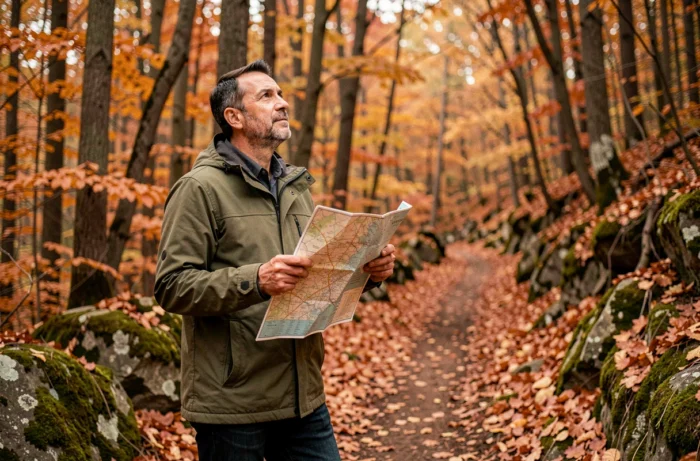
The micro-adventure involves breaking away from routine without leaving one’s local area. The principle is based on a change of perspective rather than destination: taking an unknown path, exploring a nearby neighborhood on foot, photographing a daily route from an unusual angle.
This format works just as well on a Sunday in January as on a summer evening after work. No special equipment is required, which removes the logistical barrier that often hinders planned outings. A walk without a predetermined route, a park crossed for the first time, or a shopping street discovered against the usual habits is enough to create a real sense of escape.
For those looking to discover leisure activities on Slouppi, the micro-adventure represents an accessible starting point before considering more engaging activities.
The value of this approach lies in its potential for regularity. While a weekend in the mountains remains occasional, a nearby exploration can become weekly without budget or transport constraints.
Short relaxation activities: breathing, relaxation, and sensory breaks
Leisure is not measured in hours. Several relaxation techniques produce a measurable effect in just a few minutes, making them compatible with a busy schedule.
Heart coherence involves synchronizing one’s breathing to a regular rhythm (calibrated inhalation and exhalation) for a few minutes. This practice directly affects the autonomic nervous system and lowers heart rate.
Other short formats deserve to be integrated into a leisure routine:
- Progressive muscle relaxation, which involves contracting and then releasing each muscle group in the body, from the feet to the face, to dissolve accumulated tension.
- Guided meditation, accessible via free apps, offering sessions of five to ten minutes suitable for beginners.
- Sensory breaks: listening to a piece of music with closed eyes, handling a pleasant material, or preparing a hot drink while focusing on each gesture.
These micro-leisure relaxation activities can fit into any day, including between two meetings or before bedtime. Their regularity matters more than their duration.
Creative and manual hobbies to practice at home all year round
Manual activities have a structural advantage over passive leisure: they fully engage attention, which leads to a natural detachment from daily concerns. The technical term is flow state, where concentration fully absorbs thought.
Creative cooking remains one of the most accessible hobbies in this category. Trying out an unknown recipe each week, for example, transforms a household chore into an exploration. The goal is not culinary performance but the process: choosing ingredients, improvising, tasting.
Decluttering as an anti-stress activity is a less obvious angle. Sorting a wardrobe, reorganizing a library, or cleaning up digital photos produces a double benefit: an immediate visible result and a regained sense of control over one’s environment. Several recent sources classify tidying up among genuine relaxation hobbies, rather than chores.
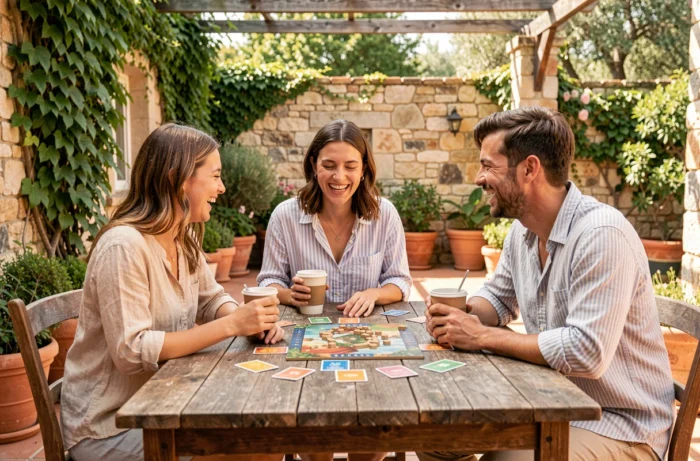
Creative workshops (drawing, pottery, sewing, writing) follow the same logic. Their practice does not require prior talent. The selection criterion is based on the pleasure of the act rather than the quality of the result.
Family and nature activities: adapting outings to each season
Outdoor leisure activities vary by season, but the principle remains constant: being in nature produces a mental recovery effect that indoor activities do not completely replace.
In autumn and winter, forest walks, chestnut picking, or treasure hunts remain feasible with minimal equipment. The cold is only an obstacle if the outing lasts a long time, which brings us back to the idea of the micro-adventure: an hour is enough.
In spring and summer, the repertoire naturally expands. Amusement parks, bodies of water, longer hikes, or picnics become obvious family options. For children, free outdoor play (climbing, running, building) provides stimulation that screens cannot offer.
The common thread among these seasonal formats lies in a simple criterion: regularity matters more than intensity. A modest outing each week produces more well-being than an ambitious excursion every three months.
Solo leisure: time for oneself as a full-fledged activity
Engaging in a hobby alone is not a substitute for collective activity. It is a distinct category, with its own benefits. Solo leisure allows one to choose their pace, interrupt or extend without negotiation, and reconnect with personal desires often set aside.
Some formats work particularly well solo:
- A movie or series marathon, organized as a ritual (deliberate program selection, preparing a snack platter, turning off the phone).
- Journaling, which involves writing freely for ten to fifteen minutes without a literary goal, as a mental clarification exercise.
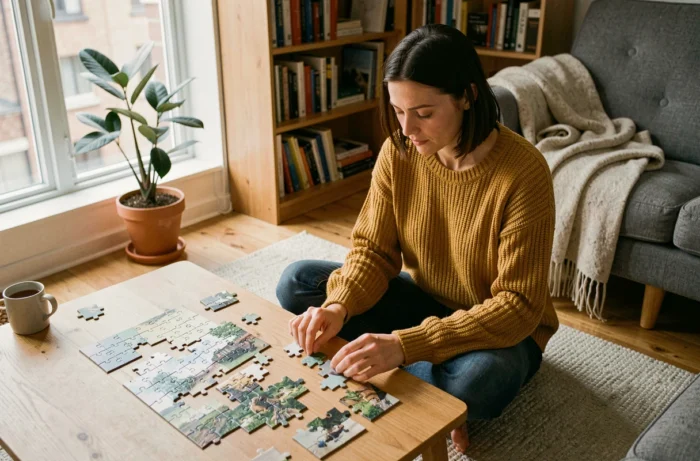
- Logic games (puzzles, crosswords, solitaire card games), which occupy the mind without requiring a screen.
- A prolonged bath or body care ritual, transformed into a sensory interlude rather than mere hygiene.
Comforting solo leisure requires neither justification nor productivity. Its primary function is recovery, not achievement.
The common thread among all these formats, from micro-adventure to prolonged bath, remains the same: a sustainable leisure activity is one that adapts to the real constraints of the week. The simplest activities to implement are often those that last the longest in a routine, much more than ambitious projects abandoned after two attempts.