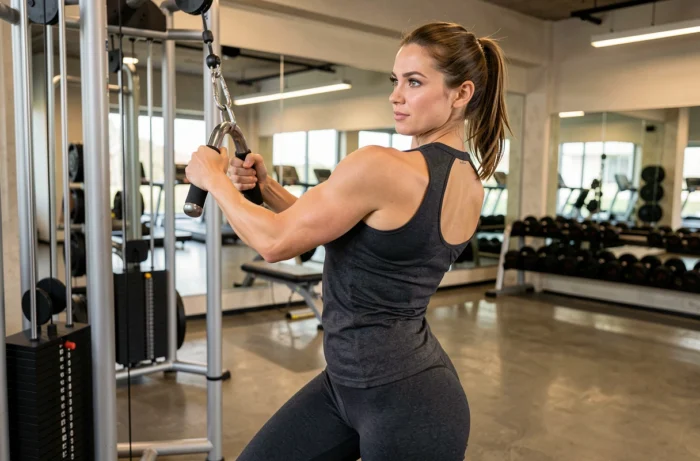
Love handles often persist despite months of regular training. This localized fat around the hips and lower abdomen drives many practitioners to seek the miracle machine at the gym. Available physiological data reminds us of a constant principle: no device can melt fat in a specific area of the body. The choice of machine matters, but not for the reasons one might typically imagine.
Local fat reduction in the gym: what recent studies say
The rotary torso, side bends with a pulley, or seated abduction machines are regularly presented as tools to slim the waist. Syntheses published between 2024 and 2026 confirm that working the obliques does not melt fat from the hips. These exercises strengthen the muscles located beneath the fat layer, without accelerating their disappearance compared to overall cardio.
A publication in Human Movement (2022) helped establish that so-called “waist-targeting” machines do not offer a measurable advantage in local fat loss. They may even lead practitioners to prioritize ineffective training, spending time on low-energy movements at the expense of more effective sessions for caloric deficit.
Understanding this point changes the way we approach the topic. The goal is not to find the device that “targets” the hips, but the one that maximizes total energy expenditure and can be used regularly over several months. It is in this logic that the choice between machines to target love handles makes practical sense.
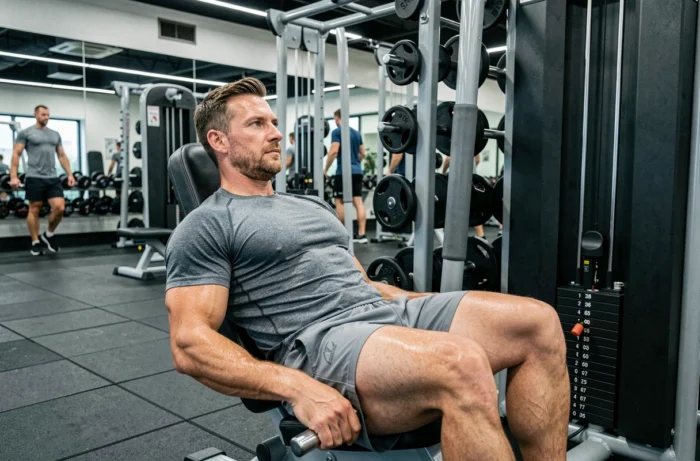
Zone 2 cardio on treadmill, bike, or rower: the best-documented strategy
Several medical guides published between 2024 and 2026 converge on a specific protocol for reducing central fat. Moderate cardio in zone 2, about 40 to 45 minutes, three to four times a week. Zone 2 corresponds to an intensity where one can talk but not sing. This effort regime promotes fat oxidation rather than glycogen consumption.
The notable point: these recommendations do not favor a particular type of machine. Inclined treadmills, stationary bikes, and rowers produce comparable effects on abdominal fat at equal perceived intensity. The determining variable is not the device, but the long-term adherence of the practitioner.
Treadmill and maximum fat oxidation
A physiological study from 2021 measured that the treadmill leads to a higher maximum fat oxidation (MFO) and reaches a higher Fatmax zone compared to the elliptical and the rower. In concrete terms, at your optimal fat-burning intensity, the proportion of lipids used as fuel is greater on a treadmill.
Incline walking is often recommended for overweight individuals or those returning to exercise. The joint impact remains moderate, and caloric expenditure significantly increases compared to flat walking.
Rower: caloric expenditure and core engagement
The rower engages both the lower limbs, back, arms, and abdominal belt. The pulling motion involves rotation and stabilization of the trunk, functionally engaging the obliques. The rower combines cardio and muscle strengthening in a single session, making it particularly interesting for practitioners with limited time.
However, the rowing technique requires learning. A poorly executed movement reduces energy expenditure and exposes the lower back to unnecessary strain.
Weekly cardio volume: the threshold that makes a difference
Recent recommendations for abdominal fat set a minimum volume: 150 minutes of moderate cardio or 75 minutes of vigorous cardio per week. This threshold can be freely distributed across the days of the week, allowing for considerable organizational flexibility.
One element stands out from the available data: below this volume, the effects on visceral and subcutaneous fat remain limited, regardless of the device used. Beyond this, additional benefits exist but follow a diminishing returns curve.
- Inclined treadmill, 45 minutes, three sessions per week: a solid and accessible base for most levels.
- Rowing at a steady pace, 30 to 40 minutes, complemented by muscle strengthening: suitable for those who want to combine cardio and core work.
- Stationary bike with progressive resistance: a low-impact option for those suffering from knee or back issues.
The choice between these three devices depends less on their theoretical effectiveness than on which one you will be able to use regularly for several months.
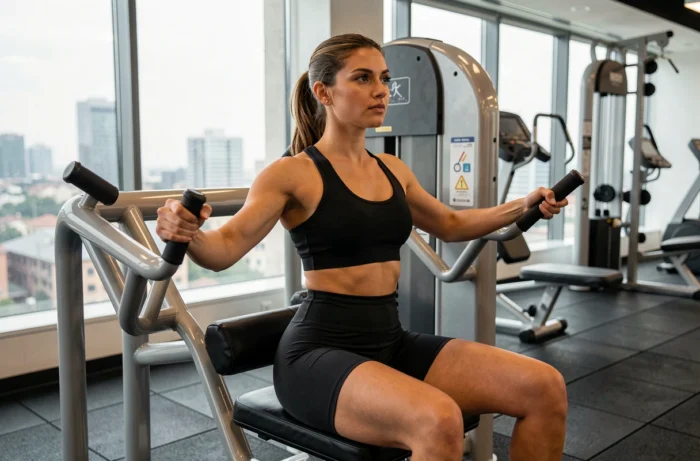
Muscle strengthening and cable machines: a complement, not a shortcut
Strengthening the abdominal belt and obliques has its place in a program targeting love handles, but as a complement to cardio, not as a replacement. Cable machines allow for movements like the wood chop or the pallof press, which work on stability and trunk rotation under load.
These exercises improve posture, enhance core stability, and help shape the waist once the fat layer is reduced. Without a caloric deficit, muscle develops under fat without making it disappear.
Weight training has an often-underestimated indirect benefit. By increasing overall muscle mass, it raises resting metabolism. The body then burns more calories daily, even outside of sessions, which accelerates fat loss in the long term.
Nutrition: the variable that the gym cannot replace
No gym machine program compensates for a caloric surplus from food. Love handles primarily form from an imbalance between intake and expenditure. Field reports vary on the exact proportion between exercise and diet in fat loss, but diet remains the most direct lever on daily caloric deficit.
The most documented combination involves regular zone 2 cardio, muscle strengthening two to three times a week, and gradual dietary adjustment. It is this holistic approach, rather than a specific machine, that produces visible results in the hip and belly area.